The Story
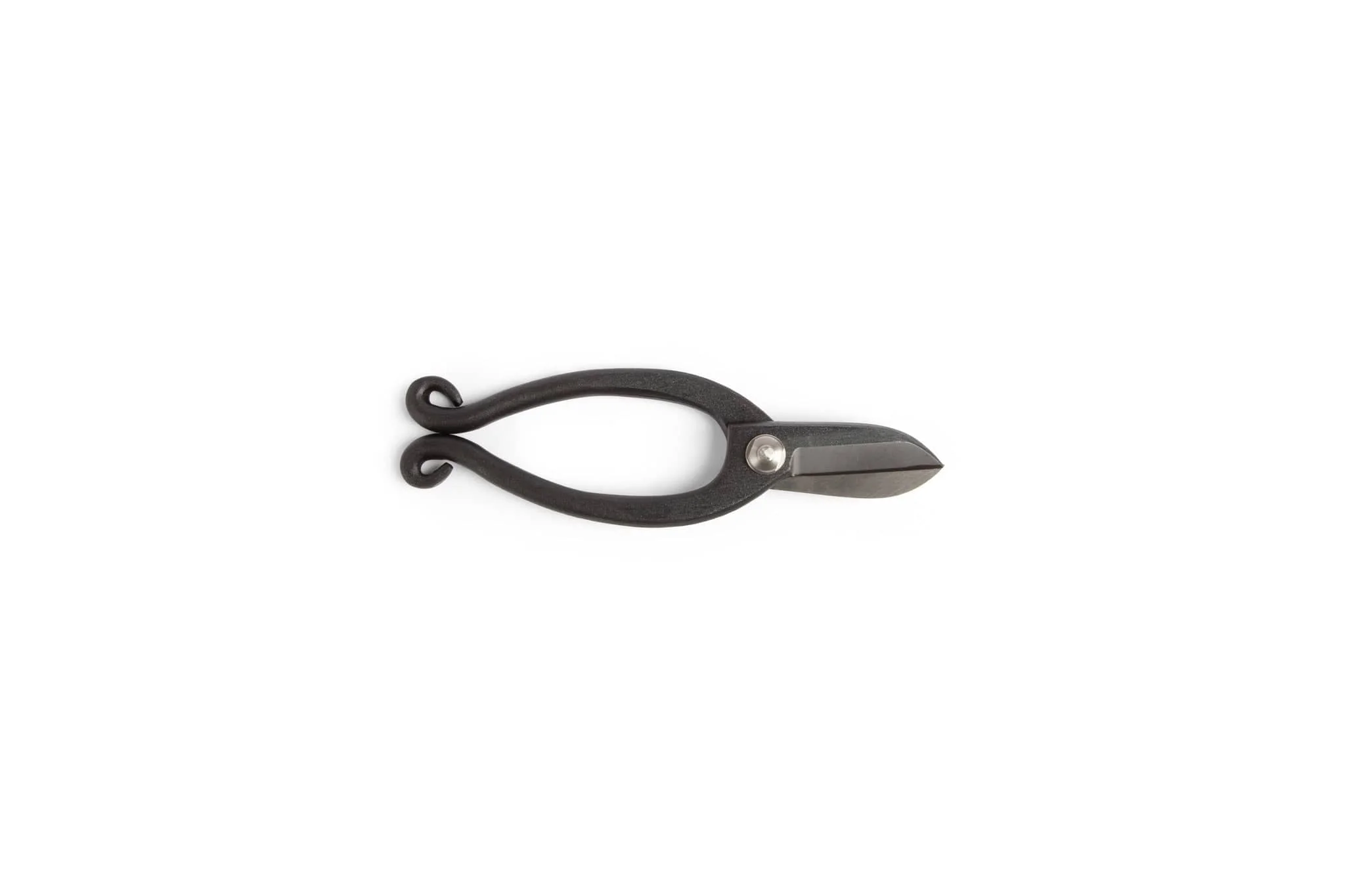
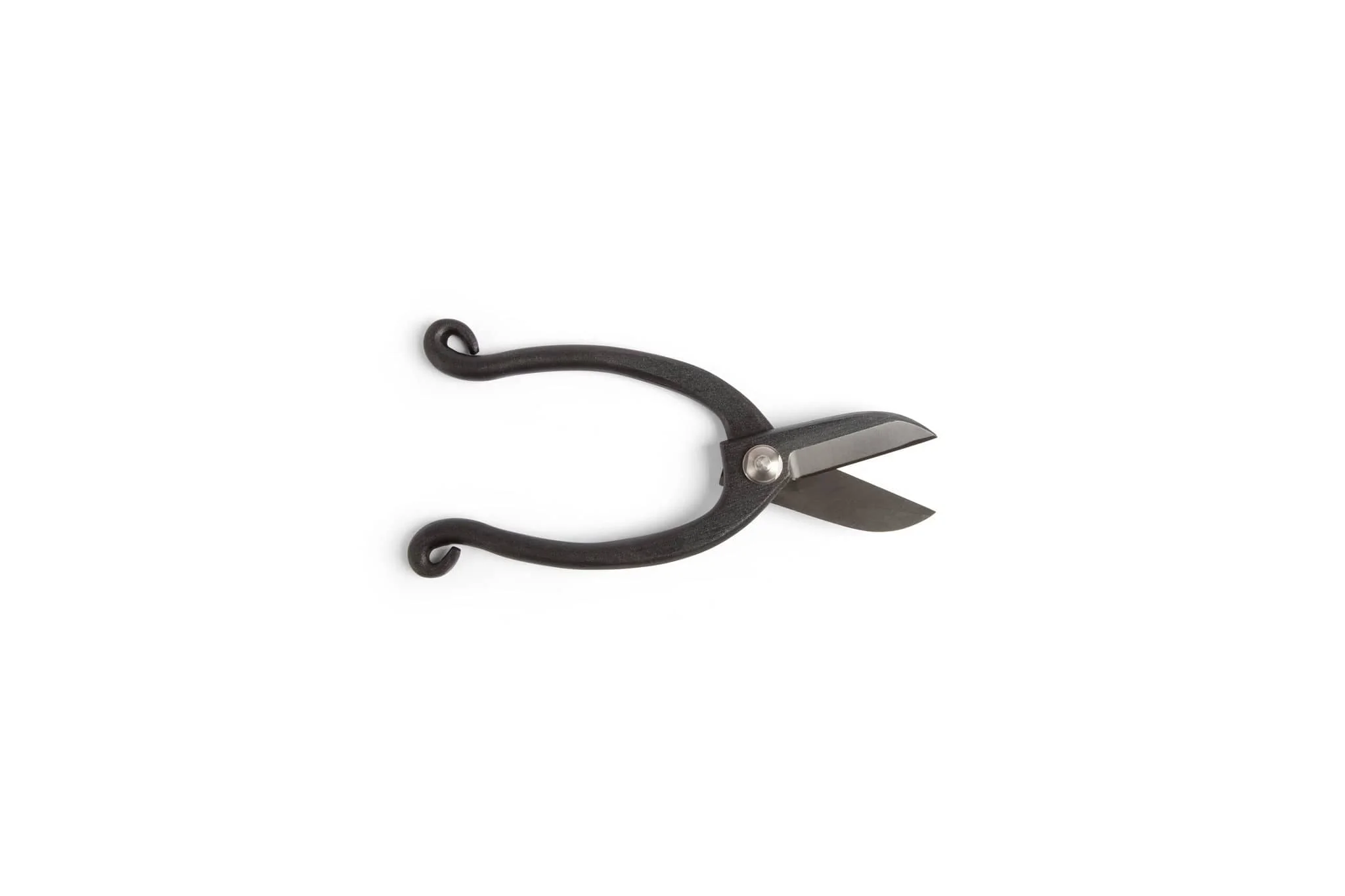
Ikenobo style scissors for traditional Japanese flower arranging. The short, broad blades are strong enough for woody cuts in hard stems. They take a bit of getting used to, but if the discipline of ikebana is something you aspire to, it’s well worth it.
Most of our sharp tools are made from carbon steel - this means they will, through regular use, stain (and eventually rust) and gradually lose their edge. Caring for them involves three things…
1. Correct Use:
- Japanese steel is hard and sharp, and can be more brittle than some people are used to - it will chip if abused
- Do not cut wire, metal, stone, plastic or any other hard material (even bamboo fibres and some very hard woods, especially knots and burrs, can damage steel edges)
- Do not twist or apply uneven pressure
- Cut diagonally across branches (not straight across) so you cut along the fibres
- Pay attention to our maximum cut dimensions, and don’t overdo it (shears are not loppers)
- Use the base of the blades, not the tips, for heavier cuts
2. Keeping Them Clean:
- Remove leaf resin, rust and gunk with a Crean Mate and water
- Dry, wipe over with Camellia oil and store in a dry place
Details & Craftsmanship
Every detail has been carefully considered to bring you the perfect product.
Description
Ikenobo style scissors for traditional Japanese flower arranging. The short, broad blades are strong enough for woody cuts in hard stems. They take a bit of getting used to, but if the discipline of ikebana is something you aspire to, it’s well worth it.
Most of our sharp tools are made from carbon steel - this means they will, through regular use, stain (and eventually rust) and gradually lose their edge. Caring for them involves three things…
1. Correct Use:
- Japanese steel is hard and sharp, and can be more brittle than some people are used to - it will chip if abused
- Do not cut wire, metal, stone, plastic or any other hard material (even bamboo fibres and some very hard woods, especially knots and burrs, can damage steel edges)
- Do not twist or apply uneven pressure
- Cut diagonally across branches (not straight across) so you cut along the fibres
- Pay attention to our maximum cut dimensions, and don’t overdo it (shears are not loppers)
- Use the base of the blades, not the tips, for heavier cuts
2. Keeping Them Clean:
- Remove leaf resin, rust and gunk with a Crean Mate and water
- Dry, wipe over with Camellia oil and store in a dry place